Are These the Signs You Need to See a Dentist Near You in Garland?

Most dental problems do not announce themselves loudly at first they start as something easy to dismiss, a twinge here, a little sensitivity there, something you plan to get checked "soon." The challenge is that the longer those signals go unanswered, the more involved the treatment tends to become. After our post on healthy habits tips from a dentist laid out what consistent home care looks like, the follow-up question patients ask most often is: how do I know when home care is no longer enough?
TL;DR Warning Signs That Mean It Is Time to See a Dentist in Garland
Knowing the signs your mouth sends before a problem becomes serious is one of the most valuable things a patient can learn and acting on them early almost always means simpler, less expensive treatment.
- Tooth sensitivity to heat, cold, or pressure is one of the earliest signals that something needs attention.
- Bleeding gums during brushing or flossing is not normal and should never be ignored.
- A persistent bad taste or odor that does not resolve with brushing often points to infection.
- Loose teeth, shifting bite, or jaw pain are later-stage signals that require prompt evaluation.
- Missing teeth left unreplaced create a chain reaction of oral health problems over time.
Signs Your Mouth Is Telling You to See a Dentist Near You in Garland
These signals are not random each one points to a specific category of problem that worsens the longer it is left unaddressed. Here is what to watch for.
-
Tooth Pain or Sensitivity That Keeps Coming Back
Occasional sensitivity after eating ice cream is one thing. Sensitivity that lingers, returns repeatedly, or sharpens when you bite down is your tooth signaling that something structural or internal has changed. It may point to a cracked tooth, a cavity reaching toward the nerve, or early pulp inflammation all of which respond well to treatment caught early. A dentist near you in Garland can identify the source with a simple exam and X-ray, often before the problem becomes visible to the naked eye.
-
Gums That Bleed, Swell, or Pull Away From Teeth
Healthy gums do not bleed during brushing or flossing. When they do, it is usually a sign of gum inflammation and if left untreated, that inflammation can progress into periodontitis, a condition that destroys the bone supporting your teeth. According to the American Dental Association, gum disease is one of the leading causes of tooth loss in adults, yet it is largely preventable when caught and treated early. Swollen, tender, or receding gum tissue is a signal that warrants a professional evaluation, not a wait-and-see approach.
-
A Persistent Bad Taste or Odor You Cannot Brush Away
Chronic bad breath or a consistently unpleasant taste even after brushing and rinsing is frequently a sign of bacterial infection rather than diet or hygiene habits alone. Cavities, infected gum pockets, and abscesses all create environments where bacteria produce odorous compounds that no amount of mouthwash will permanently resolve. Patients who notice this pattern and search for dental care are right to take it seriously. Our dental team traces the source and addresses the infection directly, rather than masking the symptom.
-
A Cracked, Chipped, or Visibly Damaged Tooth
Cracks and chips are not always painful at first, which is precisely why many patients put off having them evaluated. A small crack that causes no discomfort today can propagate under chewing pressure and eventually split the tooth below the gumline at which point extraction becomes the only option. A chipped edge that seems minor may be exposing dentin to bacteria and erosion. Catching structural damage early keeps the repair simple: bonding, a crown, or a conservative restoration rather than a far more involved procedure later.
-
A Missing Tooth That Has Not Been Replaced
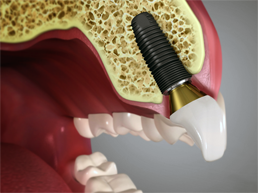
Tooth loss is not only a cosmetic concern. When a tooth is lost and the space is left open, neighboring teeth begin to tilt toward the gap, the opposing tooth may over-erupt, and the jawbone beneath the empty socket starts to shrink. Dental implants in Garland are the most effective way to halt that process because they replace the root as well as the visible tooth, preserving bone volume and bite integrity. The sooner a missing tooth is addressed, the more bone remains available to support the best replacement options.
-
Sudden Severe Pain, Swelling, or a Dental Injury
These are not signs to monitor they are signs to act on the same day. Severe toothache, facial swelling, a knocked-out tooth, or a lost crown all constitute dental emergencies that require prompt professional care. Emergency dentistry in Garland at our practice is built around exactly these situations: same-day evaluation, rapid pain relief, and a clear treatment plan so patients are never left managing an acute problem on their own. If you are in pain right now, call our team directly rather than waiting for a routine appointment slot.
Frequently Asked Questions About Seeing a Dentist Near You in Garland
1. How often should I be seeing a dentist if I have no obvious symptoms?
Twice a year is the standard recommendation for patients with healthy gums and no active dental concerns. Some patients with a history of gum disease or a higher cavity risk benefit from three or four visits annually. Our dental team assesses your individual situation and recommends a schedule that fits your actual needs not a one-size-fits-all interval.
2. Can tooth sensitivity ever resolve on its own without treatment?
Occasional mild sensitivity after whitening treatment, for example can settle on its own. Sensitivity that is recurring, worsening, or tied to biting pressure almost never resolves without intervention and tends to indicate something that will worsen over time. Our team can differentiate between the two during a straightforward exam.
3. What if I am nervous about coming in after a long gap between visits?
We hear this often, and our answer is always the same: come in anyway. Patients who have avoided the dentist for years are sometimes surprised by how manageable their situation turns out to be and those who do have significant work needed are always better served by finding out sooner than later. Our team approaches every patient without judgment and with a clear plan.
4. Is jaw pain or clicking a dental concern or something else?
Jaw discomfort, clicking, or difficulty opening wide are often signs of temporomandibular joint dysfunction, which our dental office evaluates as part of a comprehensive exam. It can also be connected to teeth grinding, bite misalignment, or referred pain from a tooth problem. Either way, it belongs in a dental evaluation not in a wait-and-see category.
5. How do I find a dentist who takes my whole family?
Our dental practice welcomes patients of all ages and offers care for children, adults, and older adults under one roof. Our multilingual staff fluent in Mandarin, Spanish, Hindi, Punjabi, and Farsi ensures that every member of your household can communicate comfortably throughout their care.
The Sooner You Come In, the Simpler the Solution
Every sign on this list has a straightforward path forward and the earlier it is addressed, the less involved that path tends to be. At Parkway Dental Care and Orthodontics, our dental team takes a conservative, minimally invasive approach that prioritizes preserving your natural teeth at every stage. If your mouth has been sending you signals you have been putting off, now is the right time to act on them. Call us at 972-495-5000 and let our dentist give you a clear picture of where things stand.